

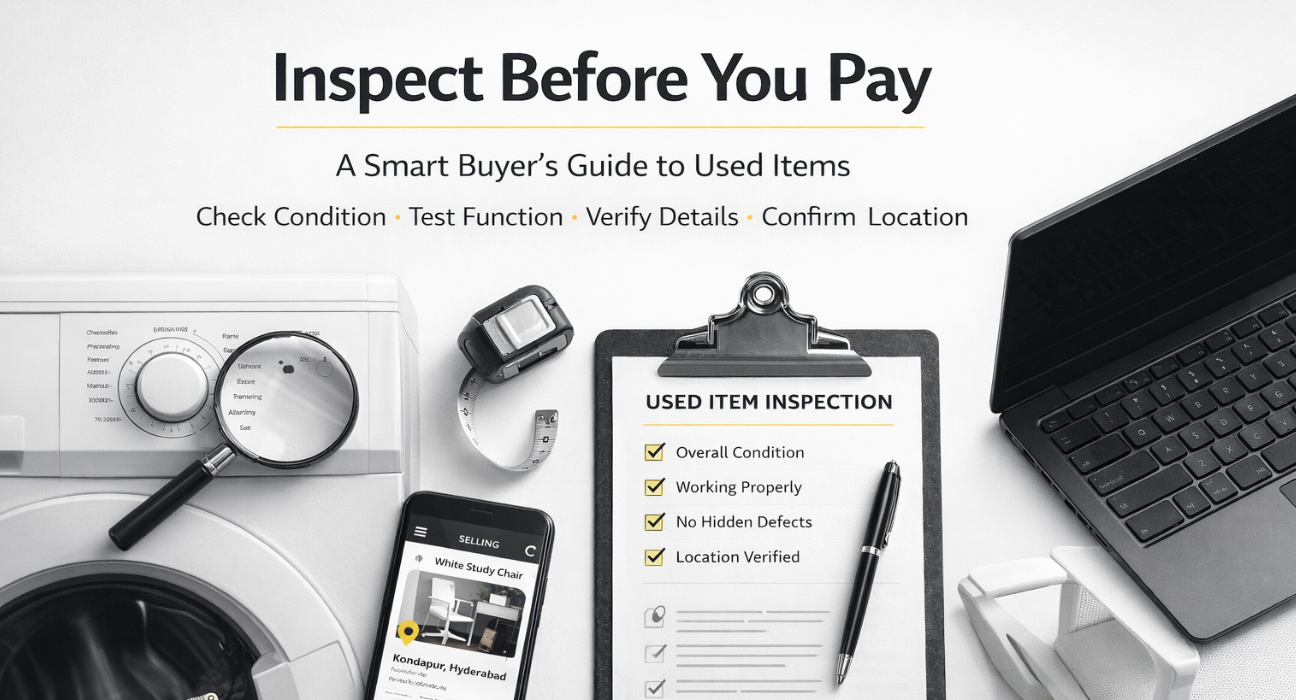
Buying a used item can save you a lot of money. But it can also go wrong if you rush into it without checking things properly. A cracked phone screen hidden under a cover, a washing machine that trips the circuit every few minutes, a bicycle with a bent frame, these are real situations people deal with after buying without checking.
If you have been browsing the Best Classified Sites in Hyderabad for a phone, appliance, or piece of furniture, this guide is for you. It covers the practical steps you should take before handing over money, so you get what you actually expect.
Why Buying Used Items Can Feel Risky
Many buyers, especially first-timers, feel unsure when buying second-hand. The hesitation is valid. You are not buying from a store with a return policy. The item might look fine in photos, but tell a different story in person. And sometimes sellers are not fully upfront about flaws.
That said, the risk is manageable. Most issues happen when buyers skip basic checks in the excitement of finding a low price. Slowing down by even fifteen minutes before buying can make a real difference.
Platforms for local buying and selling, like Sympl, make it easier to connect with nearby sellers, which means you can actually visit and inspect an item before committing. That is a big advantage over buying from unknown online stores or distant sellers.
What to Check Before You Buy, Category by Category
Smartphones and Electronics
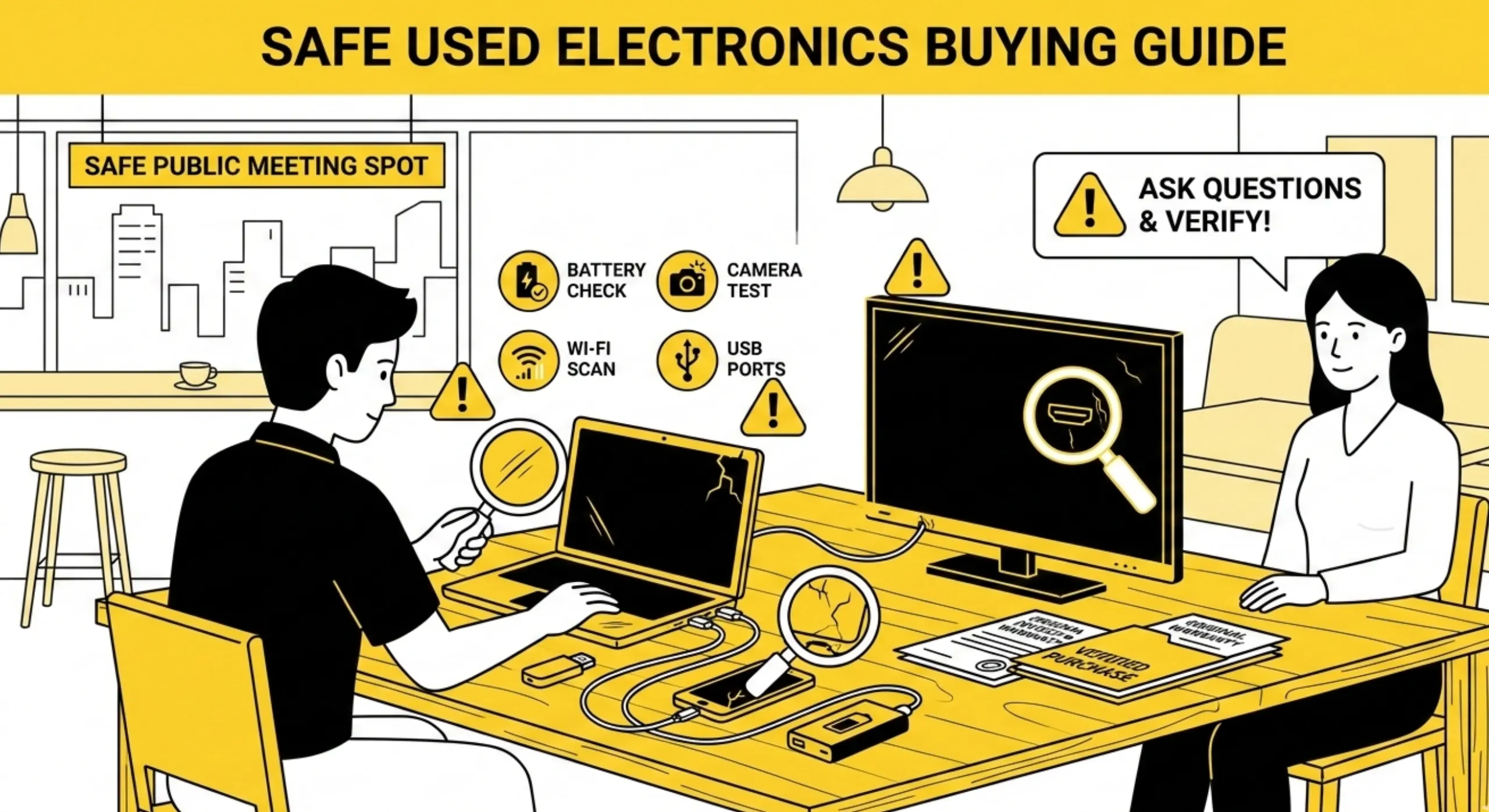
Electronics are among the most commonly listed items on local classified platforms, and also among the most misrepresented. Here is what to look at:
- Screen condition: Check for cracks, dead pixels, and yellow patches. Look at it in daylight if possible.
- Battery health: On iPhones, go to Settings > Battery > Battery Health. On Android phones, dial *#*#4636#*#* to access battery info. Anything below 80% is a red flag.
- Charging port and buttons: Plug in a charger. Press all physical buttons. Test the volume rocker, power button, and fingerprint sensor.
- Camera and speakers: Open the camera app, take a photo, record a short video, or play a YouTube clip.
- IMEI check: Dial *#06# to get the IMEI number, then check it on the manufacturer’s website or an IMEI verification site to confirm it is not blacklisted.
- Original box and accessories: These add resale value and are worth asking about.
Avoid buying electronics without meeting the seller in person. Photos can hide a lot.
Furniture and Home Items
Furniture is bulky and expensive to transport, so checking it properly before buying saves hassle later.
- Look at joints and corners: Press on them to check for wobble. Poor-quality furniture often gives way first.
- Check for pests: Wooden furniture can carry termites. Look for fine dust or small holes at the base.
- Surface damage: Minor scratches are normal with used furniture. Deep gouges or broken veneers are harder to fix and bring down the item’s value.
- Dimensions: Measure before you go. A sofa that looks right in the seller’s house might not fit through your door or suit your living room layout.
- Odour: Furniture that smells of moisture or mould is a problem. It is harder to fix than it looks.
Appliances, Refrigerators, Washing Machines, Air Conditioners
Used appliances can offer excellent value, but they need a working test before any money changes hands.
- Ask the seller to plug it in: This is non-negotiable. Never buy an appliance without seeing it run.
- Refrigerator: Open the door, feel for cool air, check the seals around the door, and look for rust or cracks inside the compartment.
- Washing machine: Run a short cycle. Listen for unusual noise. Check if the drum rotates smoothly.
- Air conditioner: Turn it on and let it run for at least five minutes. Check the cooling, the remote, and whether the indoor unit drips excessively.
- Check for gas refill history (ACs): If the gas has been refilled often, there may be a slow leak.
- Compressor and motor sounds: A healthy appliance runs with a steady, low hum. Rattling or clicking sounds often mean internal wear.
Bicycles and Two-Wheelers
Two-wheelers, cycles, scooters, and motorcycles are popular on local classified sites. Check these before riding away:
- Tyre condition: Look for cracks, worn treads, and check air pressure.
- Brakes: Squeeze both brakes firmly. They should engage smoothly with no grinding.
- Chain and gears (cycles): Shift through all gears. A chain that skips or gears that do not engage cleanly need servicing.
- Frame check: Look for bends, cracks, or welding marks that indicate past repairs.
- For motor vehicles, paperwork matters: Always ask for the RC (Registration Certificate), insurance papers, and PUC certificate. Verify the chassis and engine number match the RC. Run an RTO check on the vehicle number.
- Take it for a test ride: If the seller refuses, that alone is a reason to walk away.
Books, Clothes, and Everyday Items
For lower-value items, the checks are simpler but still worth doing.
- Books: Check for water damage, missing pages, and heavy underlining (if you prefer clean copies).
- Clothes: Check stitching, zips, buttons, and fabric condition. Ask about wash history.
- Kitchen items: Pots, pans, mixers, check for cracks, rust, and whether electrical items work.
For these, a quick in-person look is usually enough. The bigger risk is buying without seeing at all.
How to Have a Productive Meeting with the Seller
Where and how you meet matters. Keep these points in mind:
Meet in a well-lit, public place: for smaller items like phones and accessories. For large items like furniture or appliances, visiting the seller’s home is usually necessary. Take someone along if you feel uncertain.
Do not rush: Sellers sometimes create a sense of urgency, “I have three other buyers coming today.” Take the time you need to check the item. If the seller is impatient with reasonable questions, that tells you something.
Ask questions openly: How long have you used it? Why are you selling? Has it been repaired? A genuine seller will not hesitate to answer.
Negotiate after checking, not before: Once you know the real condition, you are in a much better position to discuss the price.
How Sympl Makes Local Buying and Selling More Manageable
One practical advantage of using Sympl for local buying and selling is that listings are from people in your area. This means you can meet the seller, inspect the item, and make a decision without waiting for shipping or dealing with return logistics.
When buyers and sellers are close by, the process moves faster. You post, you respond, you meet, you decide. There are fewer steps, less waiting, and no complex intermediary process to navigate.
For budget-conscious buyers, this matters. Low-cost buying is most effective when you can actually verify what you are getting. Classified platforms that keep the transaction local make that possible.
Cost and Time Savings: What Actually Adds Up
Buying used through local classifieds can be meaningfully cheaper than buying new, especially for:
- Smartphones (often 30–50% below retail for a one-year-old model)
- Furniture (much of its value drops the moment it enters a home)
- Appliances (a working two-year-old refrigerator often costs a third of a new one)
- Study books and materials for students
The time savings come from dealing with someone nearby. No waiting for courier delivery, no complex return processes, no unclear refund timelines. You see it, you decide, you take it home the same day.
Who Benefits Most from Checking Used Items Carefully
Students: buying study materials, laptops, or bicycles, a careful check means getting reliable gear without burning through a tight budget.
Families: upgrading appliances or furniture, a working used appliance can serve well for years if chosen properly.
Working professionals: selling or upgrading electronics, knowing what to check helps them buy smart and also price their own items fairly when selling.
First-time buyers: who are new to local classifieds, this guide gives them a starting point so they do not rely entirely on photos and seller descriptions.
A Few Things That Should Make You Walk Away
Even after a partial check, some signs clearly indicate it is better to move on:
- The seller refuses to let you test or inspect the item
- Price is unusually low with no clear reason
- No paperwork for a vehicle
- The seller is evasive about the item’s history
- The item does not match the photos in the listing
These are not reasons to panic; they are just reasons to step back. There are usually other listings available.
Conclusion:
Buying used items is practical, and in many cases, it just makes financial sense. A well-maintained phone, a solid wooden table, and a functioning refrigerator can serve you for years at a fraction of the new price.
The key is to slow down long enough to check. Most of what goes wrong in a used-item purchase happens when buyers skip the basics in a hurry.
Platforms like Sympl exist to connect local buyers and sellers without making the process complicated. The rest, checking the item, asking the right questions, and making a confident decision, comes down to you. And with a bit of preparation, it is not difficult at all.