


Are you scrolling through property listings today, wondering which investment will actually generate steady rental income? You’re not alone. Thousands of Indians search for investment properties daily, hoping to find that perfect flat in Bangalore’s Whitefield or that promising apartment near Hyderabad’s HITEC City that will deliver consistent returns. With property prices varying dramatically across cities and rental yields ranging from 2% to 6%, knowing what separates a good rental investment from a mediocre one becomes crucial.
Checking today’s newly posted properties matters because the best investment opportunities get snapped up within days. An owner-posted 2BHK near Pune’s Hinjewadi IT park or a well-priced flat near Delhi’s metro stations can receive multiple enquiries within hours. Fresh listings often come from motivated sellers offering realistic prices, giving you better negotiation leverage. Whether you’re a first-time investor or expanding your property portfolio, understanding the fundamentals of rental property investment helps you make confident decisions when you spot that promising listing today.
Location: The Foundation of Rental Income
Location determines everything in rental property investment. A well-maintained flat in a poor location struggles to find tenants, whilst even an average property in a prime area rents quickly at good rates. The key is identifying locations with strong, sustained rental demand.
IT hubs and business districts top the list for rental demand. Areas like Gachibowli, Madhapur, and Kondapur in Hyderabad see constant demand from tech professionals working in companies like Microsoft, Google, and Amazon. Similarly, Whitefield, Marathahalli, and Electronic City in Bangalore attract thousands of IT workers seeking accommodation close to their offices. These localities command premium rents a 2BHK in Gachibowli easily fetches ₹25,000 to ₹35,000 monthly, whilst similar properties in Bangalore’s Whitefield rent for ₹30,000 to ₹45,000.
Proximity to metro stations significantly boosts rental appeal. Properties within 500 metres of Delhi Metro stations in areas like Rajouri Garden, Hauz Khas, or Dwarka see 20-30% higher rental demand compared to locations requiring auto or bus connectivity. Chennai’s expanding metro network has made areas along the corridors from Koyambedu to Airport and Washermanpet to Wimco Nagar increasingly attractive for rental investments.
Educational institutions create stable, long-term rental demand. Areas surrounding universities and colleges in Pune like Aundh, Kothrud, and Katraj see consistent demand from students and their families. Parents prefer renting flats near reputed schools and coaching centres, creating year-round occupancy with minimal vacancy periods.
Established residential localities with good infrastructure attract families seeking long-term rentals. Neighbourhoods like Banjara Hills in Hyderabad, Indiranagar in Bangalore, or Anna Nagar in Chennai offer reliable rental income with tenants who stay for years. These areas have hospitals, schools, shopping centres, and entertainment options, making them self-sufficient ecosystems that tenants rarely want to leave.
Understanding Rental Yields and Returns
Rental yield—the annual rental income as a percentage of property value varies dramatically across Indian cities and localities. Understanding realistic yields helps you evaluate whether a property listing you see today represents a good investment opportunity.
Tier-1 cities generally offer lower rental yields but better capital appreciation. In Mumbai’s suburbs, rental yields hover around 2-3%, whilst Bangalore and Pune offer slightly better yields of 3-4%. However, Hyderabad and Chennai provide more attractive rental yields of 4-5% in upcoming areas, making them popular amongst yield-focused investors.
Calculate the gross rental yield using this simple formula: (Annual Rental Income ÷ Property Purchase Price) × 100. For example, a flat in Kondapur, Hyderabad, purchased for ₹60 lakhs and rented at ₹30,000 monthly generates an annual rent of ₹3.6 lakhs, giving a gross yield of 6%. Compare this with your other investment options: fixed deposits currently offer around 7% interest, but rental property provides inflation-protected income plus capital appreciation.
Consider the net rental yield, which accounts for expenses like property tax, maintenance charges, vacancy periods, and repairs. Deduct approximately 20-25% from gross rental income for these costs. That 6% gross yield becomes 4.5% net yield after expenses, still attractive when you factor in property value appreciation over time.
Location within a city dramatically affects yields. Upcoming areas in Hyderabad, like Nallagandla or Tellapur, offer higher rental yields of 5-6% compared to established localities like Jubilee Hills at 3-4%. Similarly, Bangalore’s emerging areas like Sarjapur Road or Hennur provide better yields than premium localities like Koramangala or Jayanagar.
Check if the rent-to-price ratio makes sense. As a thumb rule, monthly rent should be at least 0.4-0.5% of the property value for a decent investment. A ₹50 lakh property should ideally rent for ₹20,000 to ₹25,000 monthly. If you see a listing today offering significantly lower rent potential, it might not be the best investment despite other attractive features.
Property Type and Configuration That Tenants Prefer
The type and configuration of your investment property directly impact how quickly you find tenants and the rent you can command. Understanding tenant preferences in your target location helps you choose wisely from today’s listings.
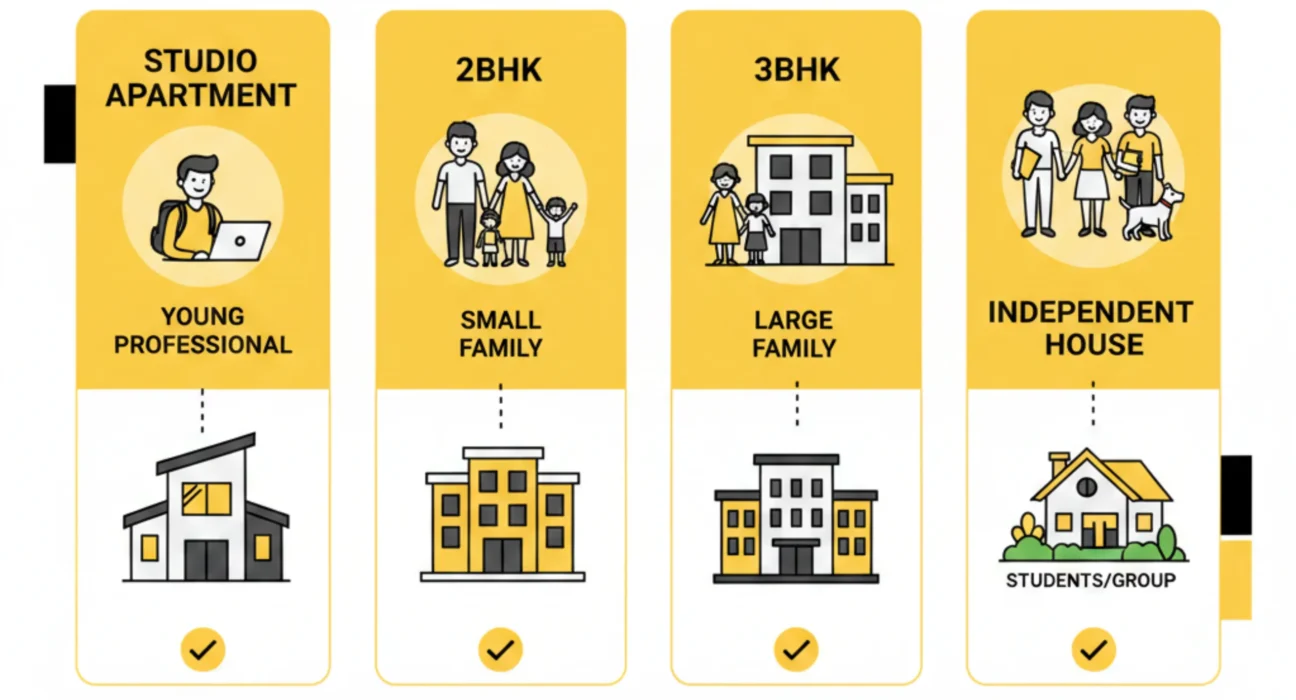
2BHK flats dominate rental demand across Indian cities. Young professionals, small families, and working couples prefer this configuration for its balance of space and affordability. A 2BHK flat in areas like Kukatpally in Hyderabad, Whitefield in Bangalore, or Wakad in Pune rarely stays vacant for long. These units typically range from 900 to 1,200 square feet and rent for ₹20,000 to ₹40,000 depending on location and amenities.
3BHK apartments attract family tenants who stay longer, reducing vacancy and turnover costs. These larger units in gated communities with good schools nearby command premium rents. In Chennai’s OMR (Old Mahabalipuram Road) area or Bangalore’s Sarjapur Road, 3BHK flats rent for ₹35,000 to ₹60,000 monthly to families working in nearby IT companies.
Furnished versus unfurnished properties present different investment equations. Furnished flats rent for 20-30% more than unfurnished ones but require higher initial investment and maintenance. In transient areas with many corporate tenants like Gurgaon’s Cyber City or Pune’s Hinjewadi furnished 2BHK flats are highly sought after. However, wear and tear on furniture and appliances adds to your maintenance costs.
Independent houses appeal to specific tenant segments. Families with children or pets prefer ground-floor independent houses in localities like Manikonda in Hyderabad or HSR Layout in Bangalore. These properties command good rents (₹30,000 to ₹70,000) but may take longer to rent compared to apartments in gated communities.
Studio and 1BHK units cater to single professionals and students. Near colleges in Pune’s Aundh or tech parks in Bangalore’s Bellandur, compact units rent quickly at ₹12,000 to ₹20,000 monthly. Multiple small units can generate better total returns than one large property, though they require more management effort.
Gated communities with amenities attract quality tenants willing to pay premium rents. Properties in complexes with security, parking, gym, and recreational facilities rent faster and at higher rates. A 2BHK in a well-maintained gated community in Hyderabad’s Miyapur or Bangalore’s Electronic City easily commands ₹5,000 to ₹10,000 more than similar standalone flats.
Legal Clarity and Documentation
Properties with clear legal titles and complete documentation make superior investments. Legal complications create tenant acquisition problems and affect resale value. When you find an attractive listing today, verify these aspects before proceeding.
Check the property’s title deed carefully. Ensure the seller has clear, undisputed ownership with a complete chain of title documents. Properties with pending litigations, disputed ownership, or unclear boundaries create endless problems. In cities like Delhi and Mumbai where land records are complex, engage a property lawyer to verify documents before investing.
Approved building plans and occupancy certificates are essential. Properties built without proper approvals or deviating from sanctioned plans face legal risks. Municipal corporations in Bangalore, Hyderabad, and other cities increasingly penalise illegal constructions. Tenants, especially corporate employees receiving HRA benefits, prefer properties with proper documentation for rent agreement registration.
Encumbrance certificate confirms no existing loans or legal claims on the property. Obtained this from the sub-registrar’s office for the past 13-30 years. A clean EC gives you and your future tenants peace of mind.
RERA registration applies to under-construction properties. If you’re considering a pre-launch or under-construction property for investment, verify the builder’s RERA registration and project details. This protects you from project delays and ensures you receive possession as promised.
Tax compliance matters for smooth rental income. Ensure previous property tax payments are up to date. Outstanding taxes become your liability after purchase. Property tax receipts also serve as important documents for rent agreement registration.
Society formation and proper governance in apartment complexes affect your investment experience. Well-managed societies with transparent accounting and regular maintenance provide better tenant experiences. Check if the society is registered and has proper bye-laws, especially for resale flats in older complexes.
Infrastructure and Future Development Potential
Smart investors look beyond current rental income to future value appreciation. Infrastructure development and upcoming projects can transform average properties into excellent long-term investments.
Metro connectivity plans dramatically boost property values and rental demand. Hyderabad’s expanding metro network covering areas like Raidurg, Financial District, and Kokapet has already increased property values by 30-40% along these corridors. Similarly, Bangalore’s proposed Peripheral Ring Road and metro extensions to Sarjapur and Electronic City make properties in these areas promising long-term investments.
Upcoming IT parks and business hubs create rental demand spikes. When you see today’s listings in areas where companies are setting up offices, pay attention. Pune’s Hinjewadi and nearby areas saw rental rates double after major IT companies established campuses there. Similarly, areas near upcoming office spaces in Chennai’s Porur or Hyderabad’s Kokapet offer strong appreciation potential.
Airport corridors provide excellent long-term investment opportunities. Properties along Delhi-Gurgaon Expressway, Chennai’s OMR towards the airport, or Bangalore’s areas near Kempegowda International Airport benefit from improved connectivity and commercial development.
Educational institution announcements affect rental markets. When universities or prominent schools open in upcoming areas, surrounding properties see increased demand from faculty, staff, and student families. Track such developments in areas where you’re considering investment properties.
Government infrastructure projects like ring roads, flyovers, and business districts create investment opportunities in surrounding areas. Hyderabad’s Outer Ring Road development transformed previously remote areas like Kollur, Gundlapochampalli, and Adibatla into viable residential locations with good rental markets.
Social infrastructure development hospitals, shopping malls, and entertainment centres—makes localities more liveable and desirable. Areas developing comprehensive infrastructure see better tenant retention and steady rental growth.
Tenant Profile and Market Stability
Understanding who will rent your property helps you choose the right investment. Different localities attract different tenant profiles, each with specific advantages and considerations.
Corporate employees form the most reliable tenant segment. They have stable incomes, stay longer, and maintain properties well. Areas near IT hubs and business districts in Gachibowli, Whitefield, or Powai attract these tenants. Companies often provide rental assistance to employees, ensuring timely payments.
Startup ecosystem areas attract young professionals who prefer modern amenities and co-working spaces. Localities like Koramangala in Bangalore or Madhapur in Hyderabad near startup hubs see high demand for well-furnished, contemporary apartments. These tenants might stay shorter periods but pay premium rents.
Family tenants provide stability and longer tenancies. Residential areas with good schools in localities like Anna Nagar in Chennai, Aundh in Pune, or Kondapur in Hyderabad attract families seeking 3BHK apartments. They typically stay for 3-5 years, reducing turnover costs significantly.
Student accommodation near colleges and universities offers different dynamics. Areas around universities in Pune or near coaching centres in Kota see demand for multiple smaller units. Student tenants require more management but create year-round demand across multiple properties.
NRI tenants returning to India or looking for pied-à-terre arrangements pay premium rents for properties in established localities. They prefer gated communities with full facilities in areas like Hitech City in Hyderabad or Electronic City in Bangalore.
Assess the overall rental market stability in your target area. Localities dependent on single industries face risks if that sector experiences downturns. Diversified employment bases across IT, manufacturing, healthcare, and services provide more stable rental markets.
Practical Investment Considerations
Beyond location and yields, several practical factors determine your rental property investment success. Consider these aspects when evaluating listings you see today.
Budget alignment is crucial. Properties priced between ₹40 lakhs and ₹80 lakhs in cities like Hyderabad, Pune, and Chennai offer the sweet spot for rental investments affordable enough for individual investors whilst commanding decent rents. Ultra-luxury properties above ₹1.5 crore typically offer lower yields and longer vacancy periods.
Maintenance and upkeep costs vary significantly. Older properties might offer lower purchase prices but require higher maintenance spending. Newly constructed or recently renovated properties in gated communities might cost more initially but need minimal maintenance for 5-7 years. Calculate the total cost of ownership, not just the purchase price.
Property management requirements depend on your involvement level. If you live in a different city from your investment property, factor in property management costs or the time required for remote management. Well-managed gated communities with responsive facility teams reduce your active involvement requirements.
Loan availability and interest rates affect your investment returns. If you’re taking a home loan for investment property, current interest rates around 8.5-9% reduce your net yields. However, loan interest provides tax benefits under Section 24(b) of the Income Tax Act, offsetting some costs.
Liquidity considerations matter too. Properties in established localities with clear titles and good infrastructure sell faster when you need to exit. Niche properties in remote upcoming areas might offer better yields but take longer to sell.
Vacancy risk management requires realistic assessment. Factor in 1-2 months of vacancy per year when calculating returns. Properties in high-demand areas near IT hubs or educational institutions face minimal vacancy, whilst properties in saturated markets might sit empty for months.
Conclusion
A good rental property investment combines strong location, reasonable rental yields, appropriate property type, clear legal status, and future growth potential. Whether you’re looking at a 2BHK flat in Kondapur, a 3BHK apartment in Whitefield, or an independent house in Anna Nagar, evaluate each opportunity against these criteria. Properties near IT hubs, metro stations, and educational institutions in cities like Hyderabad, Bangalore, Chennai, and Pune generally offer the best balance of rental income and capital appreciation.
Remember that the best investment properties get claimed quickly. Fresh listings from motivated sellers often provide better pricing and negotiation opportunities than properties languishing on the market for months. Check daily for new opportunities in your target localities.
Ready to find your next rental property investment? Browse today’s fresh listings on Sympl.in where property owners across Hyderabad, Bangalore, Chennai, Pune, Delhi, and other major cities post flats, independent houses, villas, and plots daily. Filter by your preferred location, budget range, and property type to find opportunities that match your investment criteria. Have a property to offer for rent or sale? Post a free ad on Sympl.in and connect with genuine buyers and tenants in your area today!